
Choosing a portable speaker starts with your needs. For walks and trips, compact size, IP protection, and at least 10 hours of battery life matter most. For parties, look for power, strong bass, and 360° sound. For home use, focus on balanced frequencies and a stylish design.
The two main parameters to consider are power output (W) and loudness (SPL in dB). A quality speaker should not distort the sound even at maximum volume. Also pay attention to the body materials, Bluetooth version (5+), a dedicated app, and useful extras such as reverse charging, a built-in microphone, and compatibility with a turntable. All of this affects the overall listening experience.
In this article, we will explain how to choose a speaker in 2026, introduce Klipsch audio equipment, and review five of the best models.
What Kind of Speaker Do You Need?
When choosing a speaker, start not with technical specifications but with your own requirements. In general, all devices can be divided into three categories by purpose:
- For travel and active outdoor use, compact size, dust and water protection (IP67 for the beach, IP64 for walks), and battery life of 10–12 hours of music playback are important.
- For parties and group gatherings, power and volume, emphasized bass, and 360° sound direction are the priorities.
- For home and everyday listening, detailed sound with balanced frequencies and an attractive design that fits the interior are important.
Once you have defined your basic requirements, move on to the details. For example, for home use, people often choose a model with RCA and a built-in phono preamp for a turntable, while for a party, a Bluetooth speaker with microphone connectivity is a good option.
What to Consider When Choosing a Speaker With Good Sound
To make sure a speaker delivers high-quality sound, evaluate it as a whole. Everything matters here, from its appearance to useful extra features.
Size, Design, and Materials
The sound of a portable speaker depends on its size and body elements. Aluminum, high-quality ABS plastic, and acoustic fabric have proven to be good material choices. Models made of low-cost plastic may rattle and distort the sound. Also, do not forget the visual aspect: when buying audio equipment for home use, make sure it fits naturally into the interior.
Power and Volume
A quality speaker is not only about high power output but also about the sound pressure level, or SPL, which is measured in decibels. A driver with high sensitivity can sound louder and cleaner even at lower power than a model with higher power output but lower sensitivity.
If you want the sound to spread in 360°, pay attention to the number and placement of the drivers. A classic setup with a front-facing driver will not be enough here. A circular acoustic design is a better option. Passive radiators in such a system help balance the sound with deep bass.
Frequency Range
The device’s ability to reproduce sound accurately depends on frequency balance. Low frequencies (20–200 Hz) are responsible for volume and depth, mids (200 Hz–2 kHz) handle vocals and live instruments, and highs (2–20 kHz) cover vocals, cymbals, and sound clarity.
Good audio equipment does not distort sound at high volume. Quality speakers use digital signal processors (DSPs), which help preserve the clarity of the track.
Battery Life and Battery Capacity
Runtime depends on battery capacity. At a picnic or beach party, charging speed is especially important. Many models charge to 100% in 3–4 hours. However, there are other options as well: the Klipsch Austin needs only 2 hours.
Connectivity, Features, and Useful Extras
To ensure sound is transmitted without delays, choose Bluetooth 5.3 or newer for a stable connection. Multipoint connectivity is a convenient feature that lets you connect a laptop and smartphone at the same time, while the speaker switches between them automatically depending on priority.
Dedicated software expands the speaker’s options. For example, in the app, you can:
- adjust a custom equalizer;
- quickly update the firmware;
- connect several speakers into one network.
A built-in microphone turns the speaker into a speakerphone, which is convenient if you want to call friends who could not make it to the party while you are outside. Fans of outdoor trips will appreciate the reverse charging feature, which lets you charge a smartphone from the speaker. If you enjoy the sound of vinyl records, home audio equipment should support an RCA analog input and have a built-in phono preamp.
Why Not All Speakers Sound the Same
Two speakers with the same power output can sound different. The reason lies in the cone materials, acoustic design, cabinet volume, and the quality of the amplification path.
When the volume is turned all the way up, standard drivers produce nonlinear distortion, which the human ear perceives as unpleasant noise. For a Bluetooth speaker to deliver clean sound, it must preserve the original geometry of the audio signal. At this point, engineering technologies matter more than watts and decibels. For example, Klipsch has patented solutions that help make the sound reference-level.
Klipsch Technologies That Affect Sound
The legendary American brand Klipsch was founded in 1946. For more than 75 years, it has followed an uncompromising approach to sound. Its audio equipment conveys the energy of a live performance, wherever you listen to music. Enjoy absolute transparency in the mid and high frequencies, a wide dynamic range, and punchy bass.
Klipsch uses its own technologies:
- Tractrix Horn — horns for high-frequency drivers direct sound precisely toward the listening area and reduce distortion;
- high driver sensitivity — this technology gets the most out of every watt, making the sound loud, clean, and dynamic;
- precise sound tuning — the speakers focus on detail and tonal accuracy, while you can control the sound through the Klipsch Connect app by adjusting the equalizer or bass to your taste.
Sound depends not so much on peak power as on technology. Klipsch proves this perfectly.
Top 5 Klipsch Speakers: Ranking of the Best Models
Klipsch makes Bluetooth speakers for every taste, from compact models that fit into a backpack to large subwoofers. Choosing the best models from the full range is not easy, but we have selected the top 5 options you will definitely like.
Best models of 2026:
| Category | Model | Purpose | Features |
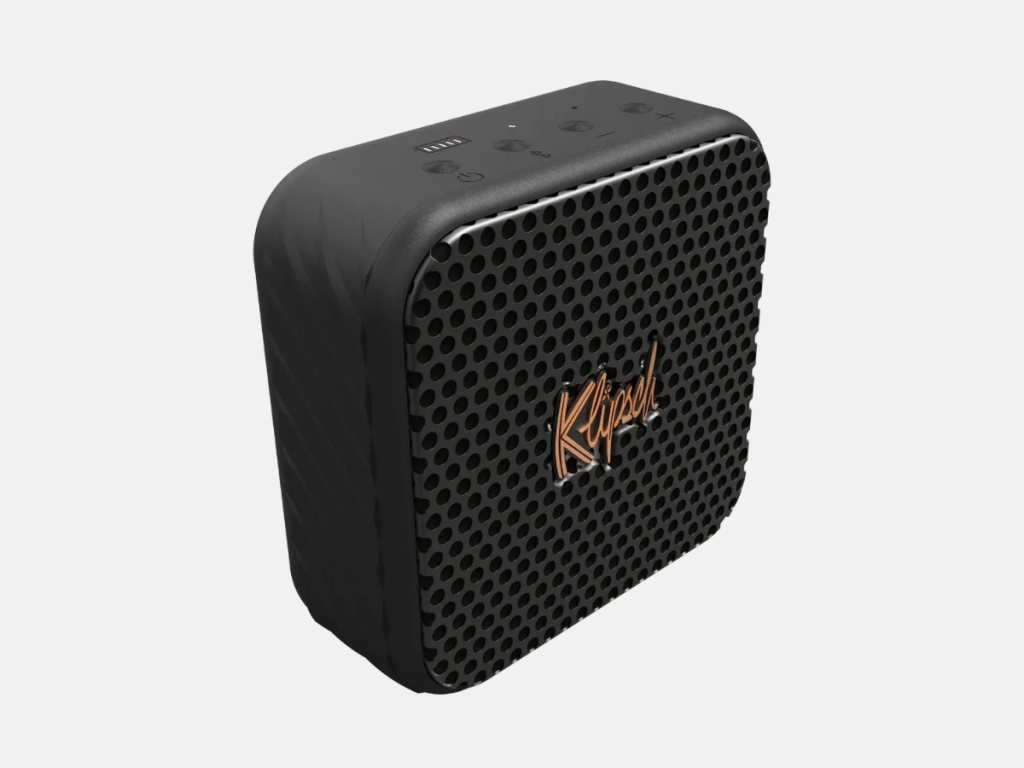
| Best Compact Speaker | Austin | City and everyday use | Passive radiators, clean sound, up to 12 hours of battery life, 85 dB volume, built-in microphone |
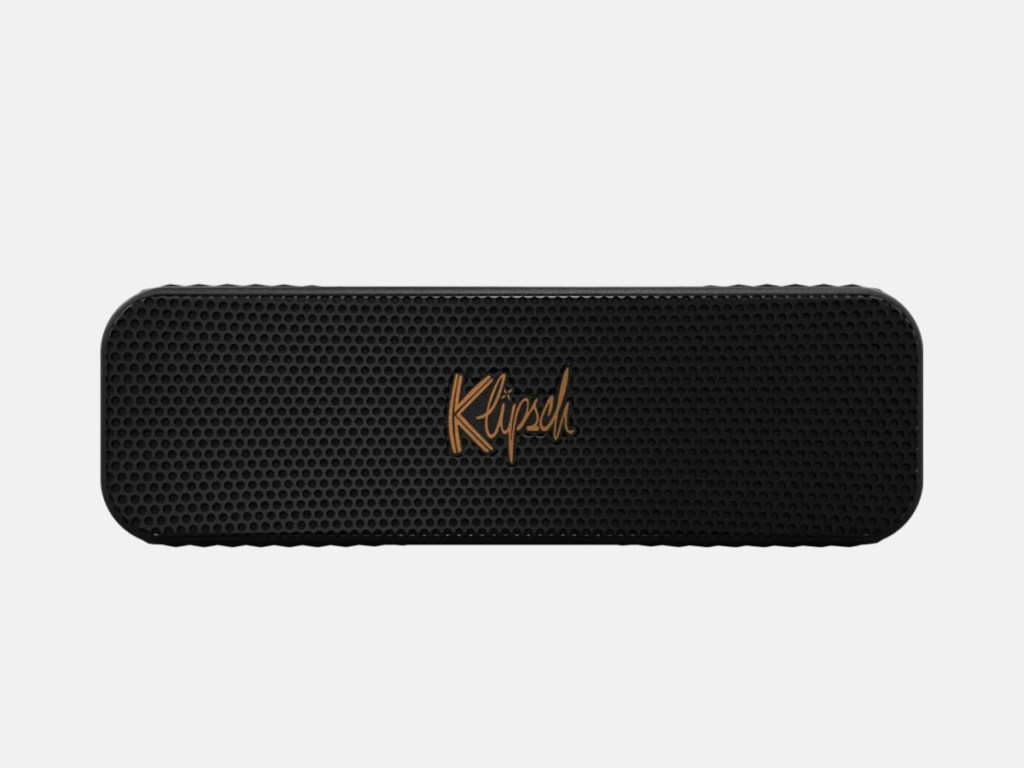
| Best for Travel | Nashville | Outdoor activities and tourism | 360° soundstage, IP67 protection, lightweight and compact body, fast charging in 1.5 hours, long battery life of about 24 hours |
| Best Powerful Portable Speaker | Detroit | Country house, picnics, large groups | Deep bass, up to 20 hours of playback |
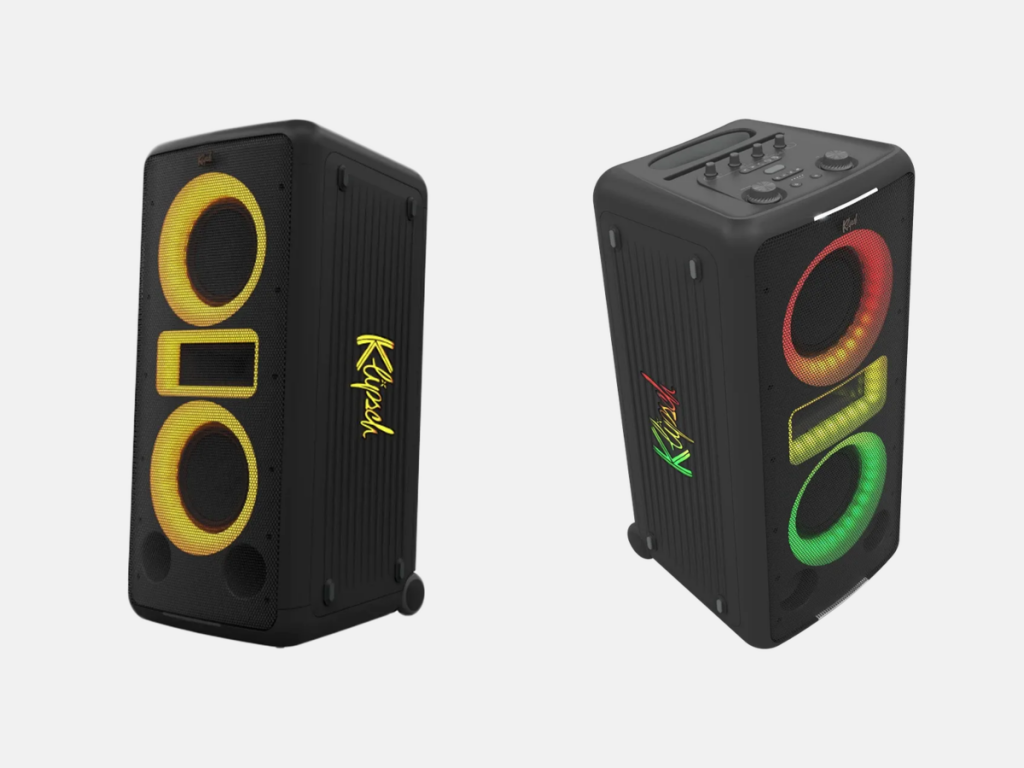
| Best for Parties | Miami | Country house, large group | Karaoke input, microphone included, light effects, high sound pressure, 18 hours of operation, guitar input |
| Best Sound for Home | The Three Plus | Home, turntables | Built-in phono preamp, stylish design, analog RCA input |
All five models are different, but they have one thing in common: legendary Klipsch quality. For more than 75 years, the brand’s approach has remained the same: live sound, good bass, and a pleasant atmosphere.
Checklist Before Buying a Speaker in 2026
Choosing the perfect audio equipment for outdoor and home use is simple. We have prepared a checklist to help you understand the key details:
- Define the location and how you will use the speaker. For travel, choose portable models such as Austin and Nashville. For a party, consider Miami and New York. For pleasant home sound, look at The One Plus and The Three Plus.
- Check the IP protection rating. If you are going to the beach or planning a picnic in the forest, IP67 is the better choice. For a poolside party, IP64 will be enough.
- Study the sensitivity level. If the SPL in dB is high, you will get loud, clean, and dynamic sound with minimal energy use.
- Check the software and ecosystem. For example, Klipsch Connect lets you control the equalizer and sound effects, connect devices into one network, and update firmware easily.
You can buy a speaker from the legendary American brand Klipsch in Georgia at iSpace. We offer only original brand equipment. Our experts are ready to answer your questions and help you choose the right model.
FAQ
Can you listen to a speaker while it is charging?
Yes, but it is better to check the manual for the specific device. Some manufacturers recommend listening to music at medium or low volume to prevent the battery from overheating.
What should you pay attention to: power or frequency range?
Both parameters matter. Power affects sound volume without distortion, while the frequency range affects the fullness and depth of the sound.
What volume level should an outdoor speaker have?
If you want to play music outdoors, for example, during an atmospheric dinner, a sound pressure level of about 85–95 dB is enough. For an outdoor party, you will need more, around 100–110 dB.
How many watts should a good speaker have?
A quality pocket-size device usually has 4–10 W, while a universal speaker has 40–100 W. A sound station for a noisy outdoor party can be more powerful than 100 W.
Check out more
Meet the Audio Legend: Klipsch Brand Now Available in iSpace Assortment
Always be aware!
Subscribe to the newsletter and be the first to know about new promotions and special offers